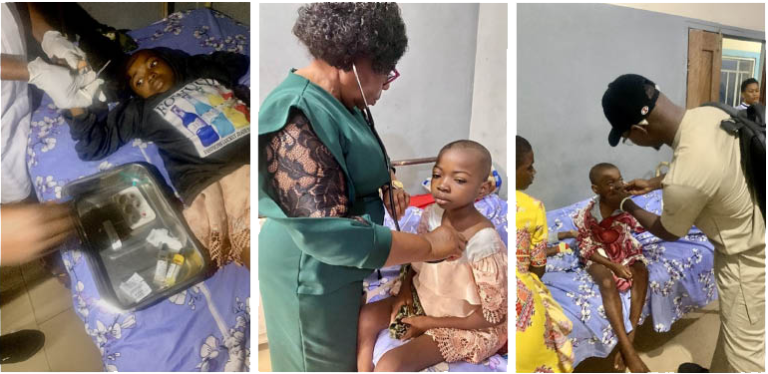
“These days, no pregnant woman should lose her life or her baby, not when care is free and within reach,” says Dr. Eno Ndem, a dedicated member of the ECEWS ACE-5 team in Oruk Anam LGA. Yet despite global strides in preventing mother-to-child transmission of HIV, fear and stigma continue to rob many women of life-saving care. In Nigeria, only 58% of HIV-positive pregnant women received antiretroviral therapy (ART) for PMTCT in 2022 (UNAIDS). For Mrs. Abasiama Kufre (Not real name), a soft-spoken woman from a rural village in Akwa Ibom, these barriers nearly cost two lives—hers and her unborn twins. The discovery came during a routine outreach in January 2025, when the ECEWS ACE-5 team tested Mrs. Kufre for HIV. The positive result was met not with despair, but with swift action. Immediate enrollment in ART and antenatal care at General Hospital, Ikot Okoro, through USAID-supported services. For weeks, she adhered to her treatment in secret, finding comfort in the confidential care of healthcare workers who assured her that her babies could be born HIV-free. But in a close-knit village where every movement is noticed, secrecy is fragile. The medications were the first tell. Unlike the casual routine of prenatal vitamins, ARVs demanded precision; pills taken exactly twelve hours apart, their packaging unfamiliar. She set phone alarms to avoid missing doses, often excusing herself from family gatherings to take them privately. Where other expectant mothers joked about forgetting their supplements, Mrs. Kufre’s careful rituals deepened suspicion around her. Then came the swelling.
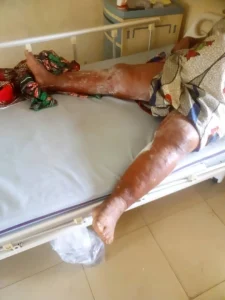
What doctors recognized as treatment-interruption edema, her family saw something far more ominous. Her mother-in-law, a respected elder who had guided many women through pregnancy, frowned at her puffy legs. “Nnyin, mmi nde edem?” (My daughter, what is happening to you?) She asked in Ibibio, her voice laced with worry. The village had its own explanations. “Na bad blood!” (It’s bad blood!) whispered a neighbor in Pidgin. “Dem don poison am,” (She’s been poisoned,) muttered another. A local prayer house declared it a spiritual attack, and soon, the pressure became overwhelming. By February, caught between medical truth and mounting fear, Mrs. Kufre made a desperate choice; she stopped her ARVs. The medicines meant to save her became another secret buried under shame. As her swelling worsened, her family withdrew her from the hospital entirely, placing their faith in prayers and traditional remedies. The ACE-5 team’s calls went unanswered. “We knew time was running out,” recalls Dr. Ndem. Refusing to give up, the team devised a careful approach, one that addressed the visible crisis without forcing disclosure. “Mama,” they urged her mother-in-law in Pidgin, “dis swelling no be ordinary thing. Government don pay for everything—why risk her life and the pikin dem?” The plea worked. A week later, Mrs. Kufre returned to the hospital, barely able to walk. The team restarted her ART without delay. On April 16, under the protective cover of Nigeria’s Free to Shine program, Mrs. Kufre delivered HIV-negative twins via cesarean section at UUTH.
The newborns received prophylaxis, and follow-up tests confirmed they were free of the virus. With ongoing counseling from the ACE-5 team, Mrs. Kufre found the courage to disclose her status to her husband. His response was simple but profound: “Thank God that we came to the hospital o. I didn’t know we could access free care like this.”
Today, Mrs. Kufre remains adherent to her treatment, formula-feeding her babies to ensure their protection, and rebuilding her strength with the support of healthcare workers who never gave up on her. Her story stands as powerful evidence that eliminating mother-to-child transmission isn’t just about medicine; it’s about patience, trust, and walking alongside women until they are ready to take each step forward. “These small victories are why we persist,” says Dr. Ndem. “When women like Mrs. Kufre triumph, entire communities learn that healthcare works, one life at a time.”