Insert HTML here
Insert HTML here
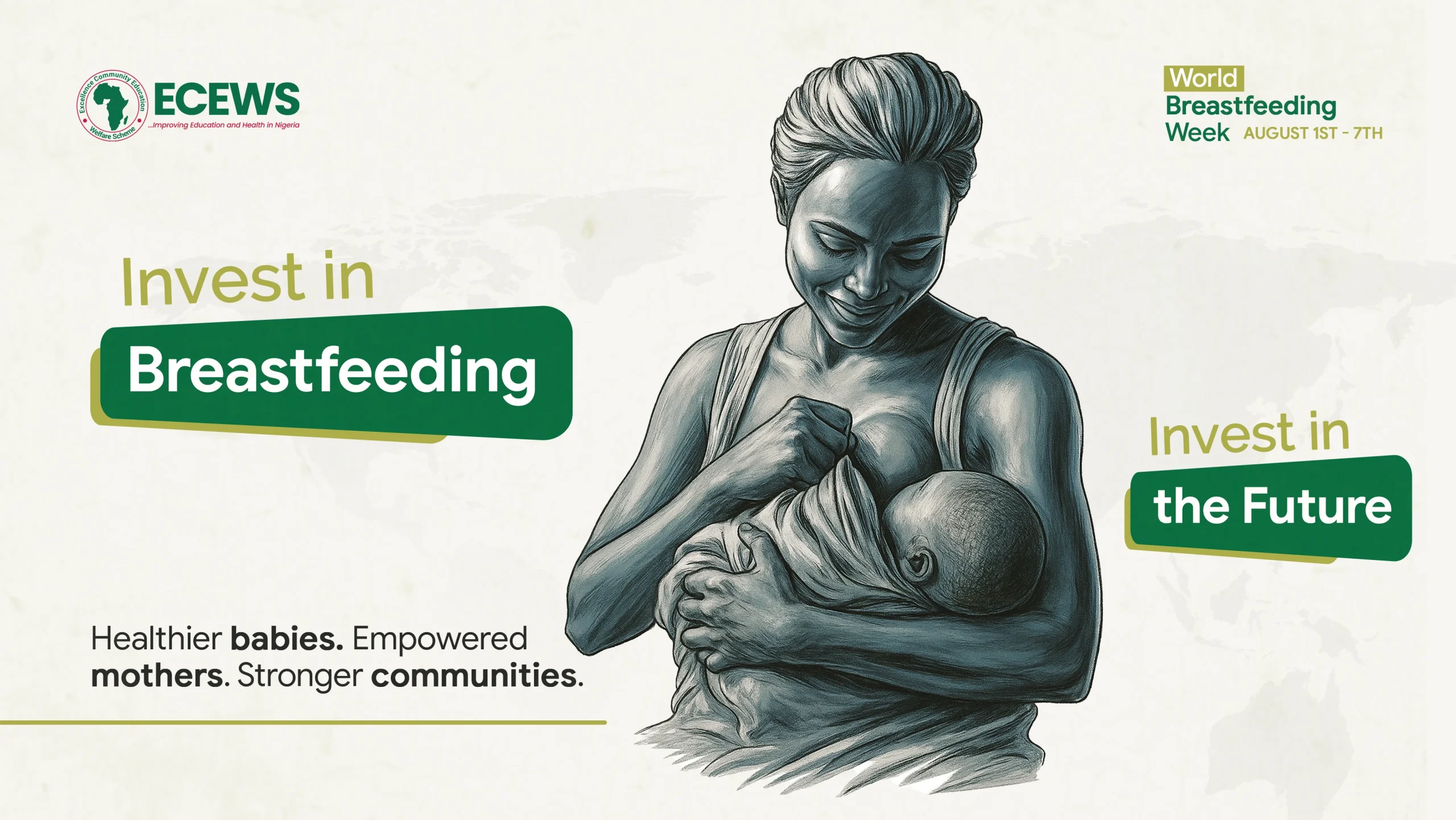
As the world observes World Breastfeeding Week from August 1st to 7th, 2025, Excellence Community Education Welfare Scheme (ECEWS) stands with the global community to champion the immense health benefits of breastfeeding for both infants and mothers. This year’s theme, “Invest in Breastfeeding, Invest in the Future,” powerfully underscores the vital role breastfeeding plays in fostering healthy individuals, strengthening families, and building resilient communities across Nigeria.
Often hailed as nature’s first vaccine, breastmilk is uniquely formulated for infants, especially during the crucial period between birth up to two years of age, when brain development and immune system formation are at their peak. It provides newborns with essential nutrients and vital antibodies, which protects them from life-threatening illnesses, including respiratory tract infections, ear infections, and sudden infant death syndrome (SIDS). Breastmilk also supports healthy brain growth, lowers the risk of chronic conditions like childhood obesity and diabetes later in life, and strengthens the profound mother-child bond.
The World Health Organization (WHO) recommends exclusive breastfeeding for the first six months of life, followed by continued breastfeeding alongside appropriate complementary foods for two years or more. It comes at very low cost, has high-impact, strengthens families, communities and nations, and contributes directly to better child survival and improved maternal health outcomes. However, according to UNICEF data from August 2024, only 34% of infants in Nigeria under six months of age were exclusively breastfed. More recent data from the 2024 National Demographic and Health Survey (NDHS) indicates that only 29% of infants are exclusively breast fed. These figures highlight the persistent challenges many Nigerian mothers face in practicing exclusive breastfeeding for the recommended six months.
At ECEWS, we understand that effective breastfeeding support goes beyond mere awareness campaigns; it demands a multi-tiered strategic approach. This includes fostering an environment where breastfeeding mothers feel supported, informed (of the proven benefits of breastfeeding, and dispelling common myths), and empowered by the healthcare professionals they encounter. It also includes equipping mothers with practical knowledge—from proper latching techniques to safe milk storage tips—and facilitating access to necessary resources and support systems. It also extends to creating a breastfeeding-enabling environment where mothers receive comprehensive support at all levels: at home (encouraging crucial male participation in supporting breastfeeding), within healthcare settings, workplaces, and public spaces.
We reaffirm our commitment to promoting, protecting, and supporting breastfeeding as a cornerstone of public health in Nigeria and sustainable development.
Want to see how we’re improving health outcomes for mothers and children? Follow all our channels to explore ECEWS’s impactful program implementation in the communities we serve.