Insert HTML here

Insert HTML here

Excellence Community Education Welfare Scheme (ECEWS) has reinforced the resilience of healthcare delivery in Cross River State through the donation of solar power systems to supported health facilities, ensuring uninterrupted access to critical HIV and other essential health services.
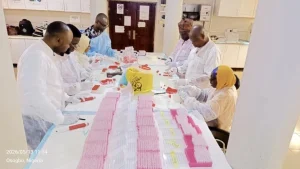
 The intervention, implemented in collaboration with the Cross River State Ministry of Health on 1st of July 2026, is designed to address one of the most persistent barriers to quality healthcare – unreliable electricity. By providing sustainable solar energy solutions, ECEWS is helping health facilities maintain uninterrupted laboratory services, preserve temperature-sensitive medicines, power diagnostic equipment, and deliver quality patient care regardless of power outages.
As part of the intervention, ECEWS procured and donated 60 units of 600W bifacial solar panels, alongside high-capacity lithium batteries, gel batteries, and inverter systems to strengthen power infrastructure across multiple facilities. Sacred Heart Catholic Hospital, Obudu, received a complete solar power upgrade featuring a 10KVA inverter and a 10KW lithium battery, while Ogoja Catholic Maternity Hospital, General Hospital Ogoja, Yala Lutheran Hospital, Cottage Hospital Akpet Central, and Ikang Primary Health Centre will each benefit from upgraded 5KVA inverter systems with 7.5KW lithium batteries. Additional facilities, including Eja Memorial Hospital, Mount Zion Medical Centre, Ekorinim Health Centre, and Ikot Enebong Health Post, also received energy support to strengthen service continuity.
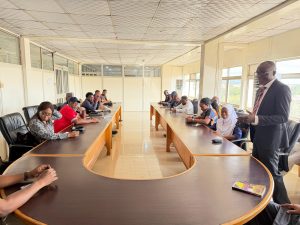
Presenting the equipment on behalf of ECEWS, the Cross River State Director, Dr. Joe Umana, reaffirmed the organization’s commitment to building resilient health systems that can sustain quality HIV services and other life-saving interventions long into the future.
 Receiving the equipment on behalf of the Cross River State Government, the Honorable Commissioner for Health, Dr. Henry Egbe Ayuk, described the intervention as timely and transformative. He noted that reliable electricity is fundamental to effective healthcare delivery, particularly for laboratory diagnostics, medicine storage, and patient care, adding that the solar installations would significantly improve operational efficiency and service quality across beneficiary facilities.