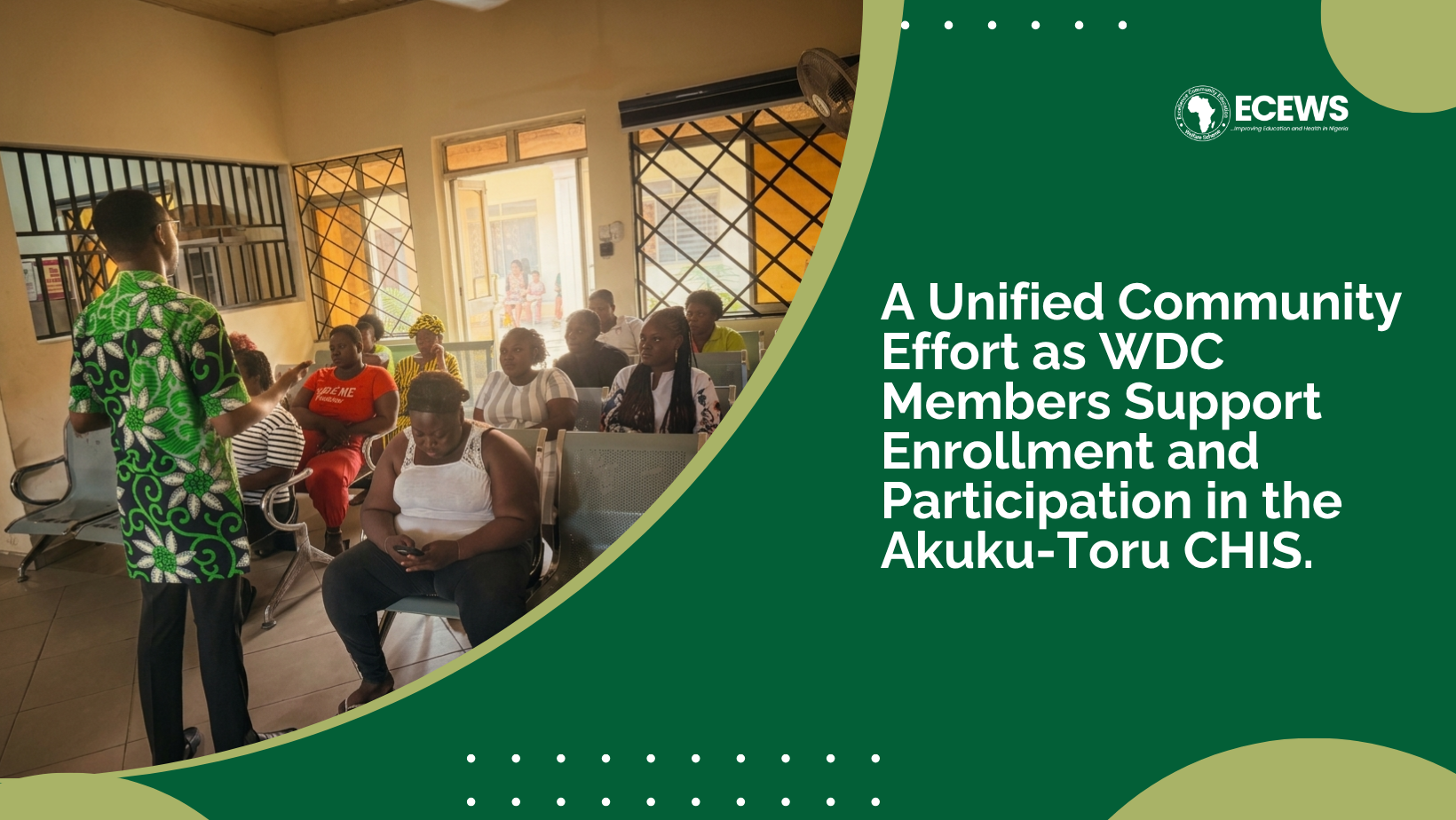
The Ward Development Committee (WDC) in Akuku-Toru Local Government Area (LGA) has played a pivotal role in supporting the implementation of the Akuku-Toru Community Health Insurance Scheme (CHIS). Through consistent community engagement, mobilization, and advocacy, the committee has demonstrated strong commitment to ensuring the success and sustainability of the scheme across the participating wards.
Even before the formal launch of the initiative, members of the WDC actively mobilized and sensitized community members on the objectives and benefits of the Community Health Insurance Scheme. Their grassroots presence and close connection with residents have enabled effective dissemination of information to individuals and families across the communities. In addition to spreading awareness, the committee regularly seeks clarification on scheme-related matters to ensure that accurate information is relayed to the public.
The WDC structure in Akuku-Toru is unique. The Model Primary Health Care Centre (MPHC), Abonnema, serves as a referral and service hub for 13 wards (Wards 1–13) out of the 17 wards in the LGA. Consequently, the WDC affiliated with the facility consists of 33 members, making it the largest WDC in Rivers State. While the statutory representatives such as the ward councilor, the head of the health facility, the community leader, youth leader, women leader, ward focal person, religious leader, and education representative are drawn from Ward 1, additional members include the women leaders and youth leaders from Wards 2–13, as well as the Officer-in-Charge of the Abonnema General Hospital. This structure ensures broad representation across the facility’s catchment area. The committee is chaired by Mr. Iyenemi Bobmanuel, while Dr. Andrew Etete, the Head of the Model Primary Health Care Centre, Abonnema, serves as the Secretary.
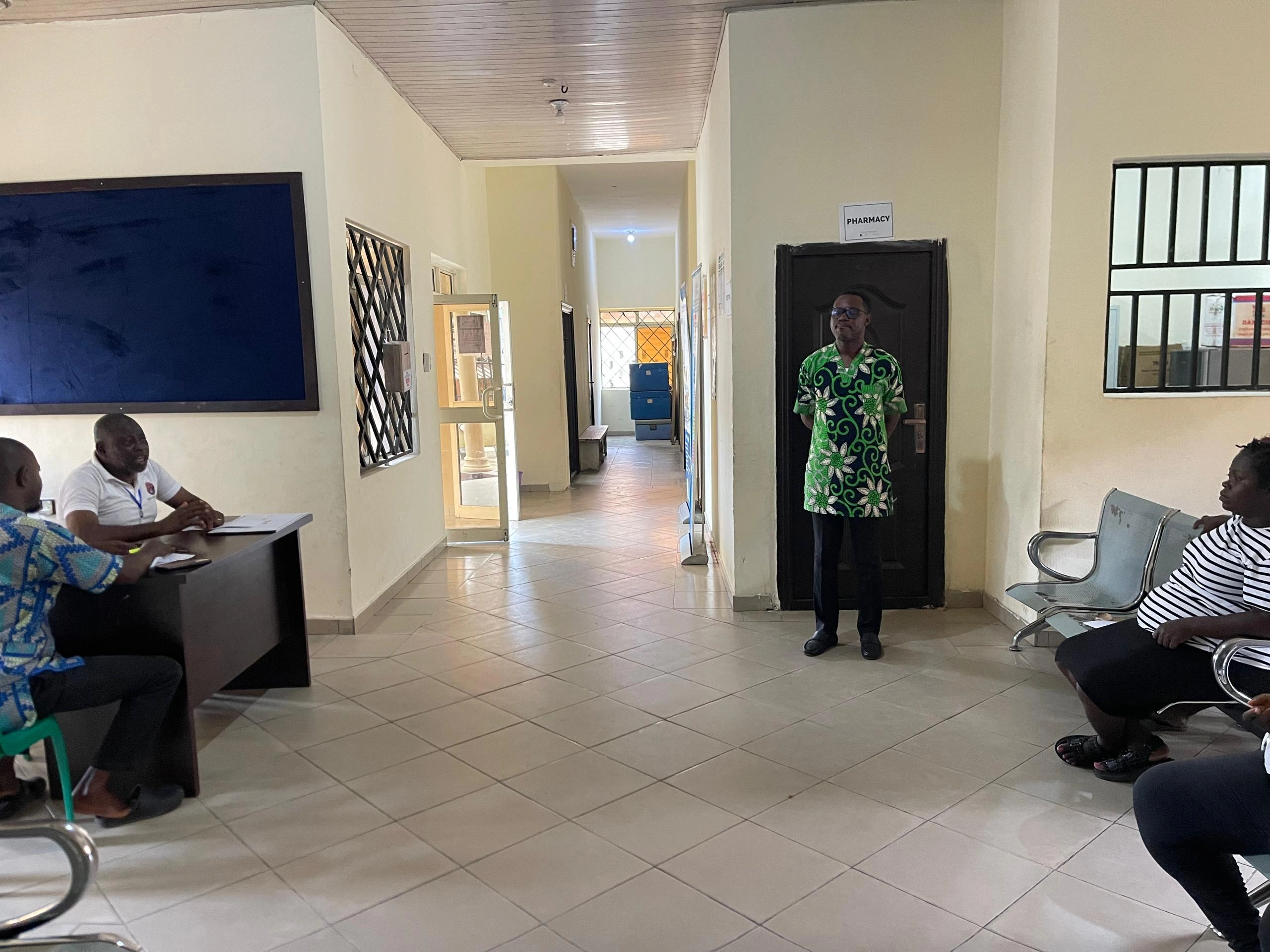
In support of the CHIS project, the WDC has mobilized residents for enrolment, galvanized community support for the official launch of the scheme and continues to conduct sensitization activities to encourage sustained participation. The committee also plays an important role in providing feedback from community members to the project team, enabling informed decision-making and improvements in service delivery.
The WDC has partnered effectively with ECEWS in implementing the scheme. Notably, members of the committee have carried out these responsibilities without requesting any form of financial incentive, reflecting their dedication to the well-being of their communities. Their commitment and voluntary service have contributed significantly to the achievements recorded under the scheme.
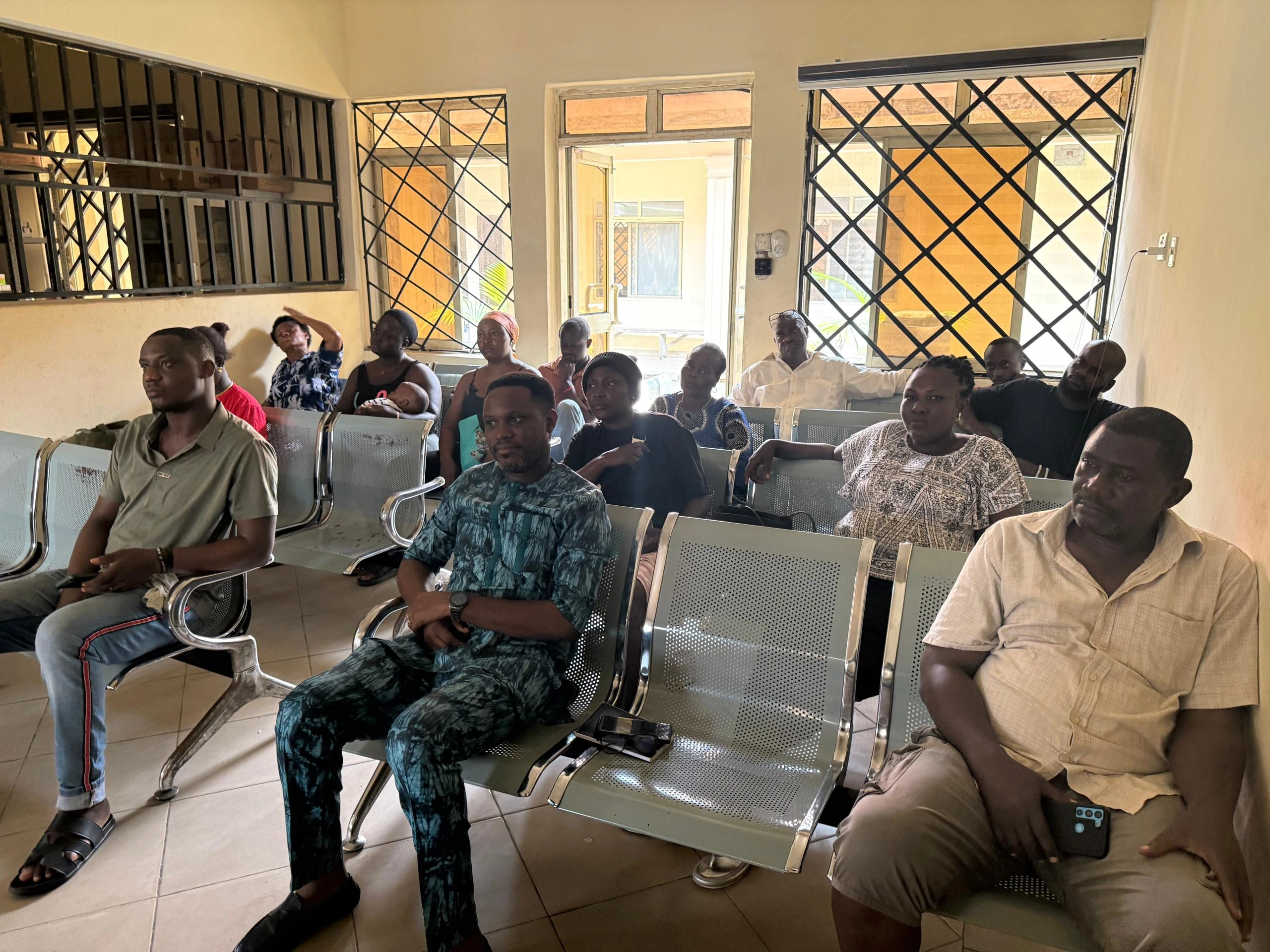
ECEWS project team is regularly invited to participate in the committee’s monthly meetings to maintain open communication and collaboration. During the most recent meeting held in February, the team engaged with WDC members and received valuable feedback from the community regarding the progress of the scheme.
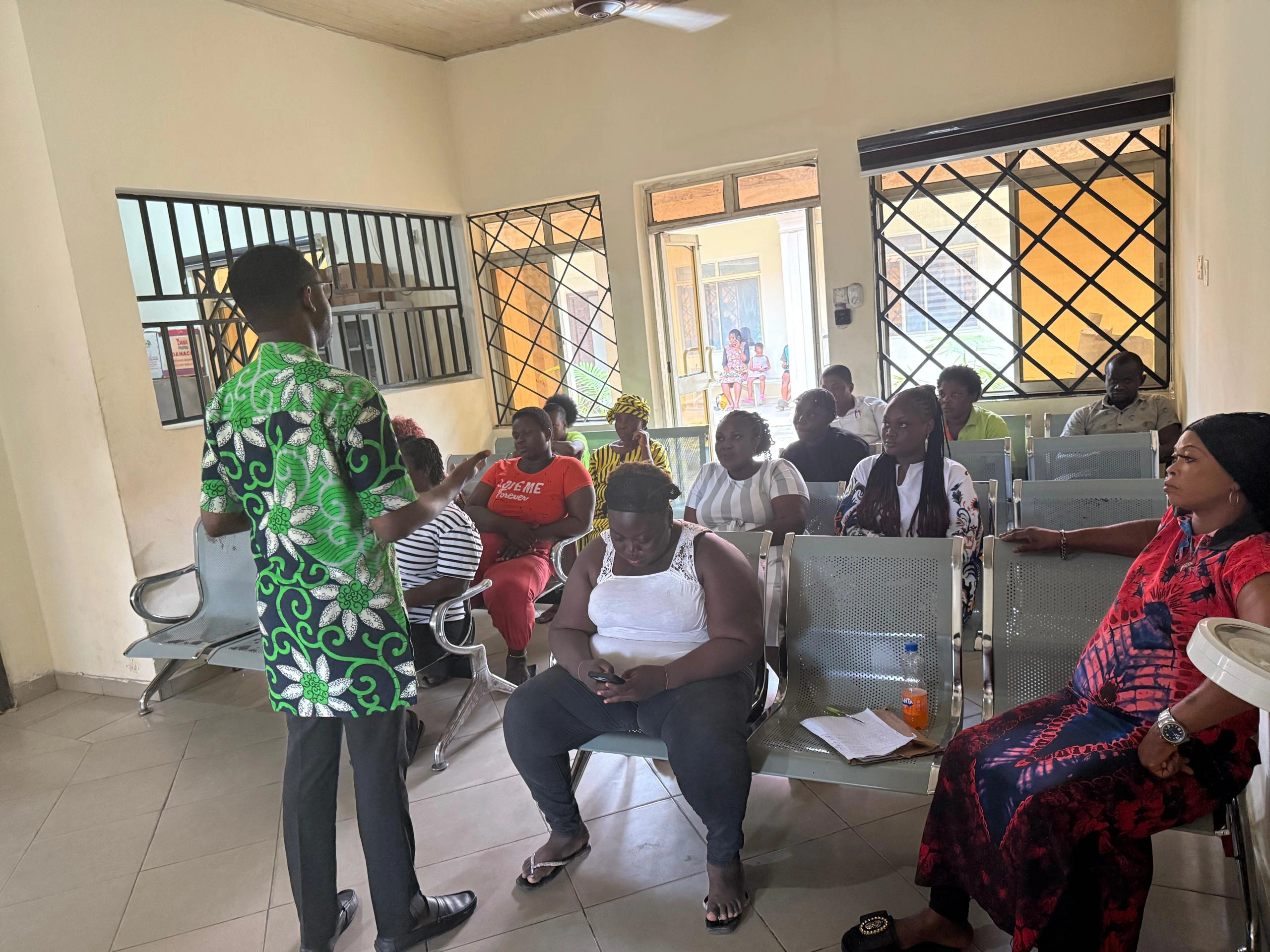
ECEWS acknowledges and commends the Ward Development Committee for its unwavering support and partnership. The organization remains committed to strengthening collaboration with the committee and other stakeholders to ensure the continued success and sustainability of the Akuku-Toru Community Health Insurance Scheme.